Introduction to the project

Kochi-Muziris Biennale, India’s largest contemporary art biennale, and a cultural catalyst shaping conversation, community and thought. Our approach reframed its website from an event-led interface into a year-round institutional platform that communicates cultural depth, global relevance, and public accessibility.

Challenges & objectives

The Kochi Biennale Foundation required a single platform capable of serving multiple stakeholders. The Biennale’s global stature needed clearer articulation, alongside sustained visibility for the Kochi Biennale Foundation and other initiatives. The platform was expected to function year-round highlighting events and collaborations and operate as a knowledge centre and archive, and mediate relationships with patrons, sponsors and benefactors.

Institutional & Curatorial Context

The Kochi Biennale Foundation required a single platform capable of serving multiple stakeholders. The Biennale’s global stature needed clearer articulation, alongside sustained visibility for the Kochi Biennale Foundation and other initiatives. The platform was expected to function year-round highlighting events and collaborations and operate as a knowledge centre and archive, and mediate relationships with patrons, sponsors and benefactors.
Our analysis revealed that this layered institutional and curatorial thinking was not mirrored through the digital experience. The existing platform felt fragmented, with a primary focus on the event rather than the KBF as a whole. Its cultural depth therefore needed to be articulated through user-based segmentation, supported by a clear and accessible framework that guided navigation and enabled easy retention. From a systems perspective, the technology stack needed to support spikes in global traffic during the Biennale as well as sustained engagement beyond the biennial period.

Digital experience and audience insight

The Biennale engages a wide spectrum of audiences, each approaching the institution with different expectations and degrees of familiarity. Recognising this diversity was central to shaping an experience that could remain open, legible, and accessible to all.

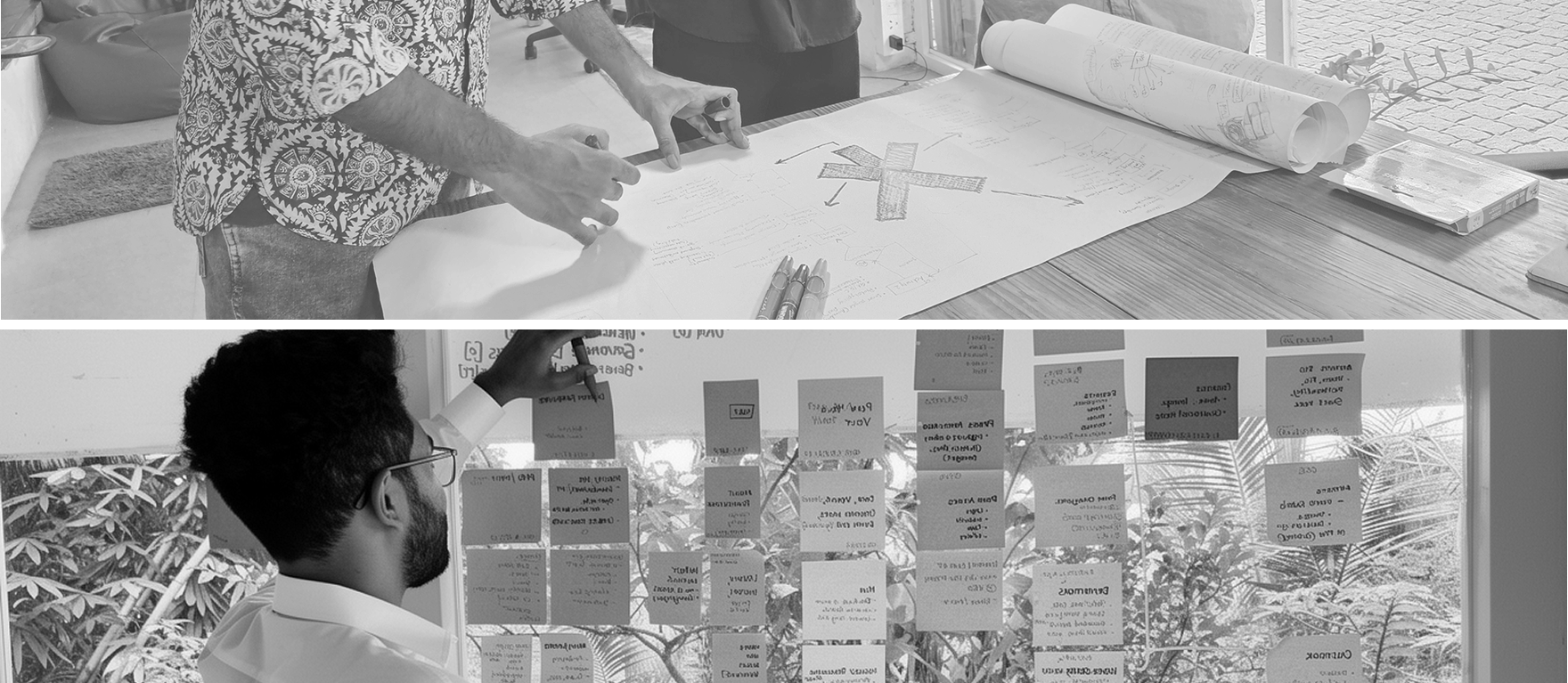
Our process was guided by BRED™, a framework rooted in research, emotional insight, and systems thinking. Deep cultural and institutional research supported the alignment and articulation of the KBF’s established vision, programmes, and values across distinct audience groups. Each user type was carefully considered, allowing content, structure, and experience to align with different ways of engaging with the Biennale.

These alignments shaped a coherent cultural narrative across the platform. The digital experience positioned the KBF as a source of knowledge, enabling institutional thought leadership for students, artists, researchers, sponsors, and cultural practitioners seeking context, depth, and understanding.
Design principles & system

The digital platform was positioned to reflect the Biennale’s cultural significance while remaining approachable. Design decisions balanced institutional authority with accessibility allowing the platform to feel inviting. The direction focused on clarity and longevity, applying visual discernment across a wide range of cultural content including artists, artworks, people, initiatives, event documentation, and multiple perspectives.
A unified visual language established a holistic institutional identity. Consistency across different aspects strengthened value perception. The brand identity, visual style, and typeface of the Kochi Biennale Foundation and the Kochi Muziris Biennale were integrated to maintain clarity across institutional and curatorial contexts.The design affirmed public familiarity with the geometric, line-based Kochi Biennale logo, extending its visual language through minimal lines used to denote and structure sections. The resulting design system was conceived as flexible, allowing it to accommodate and highlight varied content while supporting the evolving needs of a biennial event. The system was designed as a flexible, modular framework that could accommodate and highlight varied sections while enabling the Foundation to extend its presence beyond the biennale. This modularity supported the documentation and archiving of events and publications, strengthening continuity and elevating institutional leadership over time.

Experience & Accessibility

Kochi-Muziris Biennale, India’s largest contemporary art biennale, and a cultural catalyst shaping conversation, community and thought. Our approach reframed its website from an event-led interface into a year-round institutional platform that communicates cultural depth, global relevance, and public accessibility.
Interactions were restrained, purposeful, and human, reflecting the brand’s calm confidence. Subtle transitions, gentle feedback, and intuitive micro-interactions build familiarity and trust without distraction. By staying minimal and relatable, the interface supports exploration quietly, keeping focus on meaning, content, and discovery not its mechanics for users across contexts and moments naturally.

Institutional Impact

The Kochi-Muziris Biennale has played a formative role in the contemporary cultural landscape of Kochi, a historic port city that carries layered histories of movement, commerce and cultural exchange. It has established Kochi as an important site within global art discourse while fostering sustained engagement with contemporary practice across local and international audiences. Extending across heritage spaces and public sites, the Biennale expands how art is encountered, experienced, and remembered. It supports societal impact beyond the event, enables global access to archives and knowledge, and positions the Foundation for sustained relevance, engagement, and growth in the years following each Biennale edition.

Related Projects

Let’s talk innovation!

Feel free to reach us to explore an idea, or a product/service.
We will be happy to explore it with you.