


For an established business, revenue is an obvious measure of success. But revenue is also a volatile number: it can move with pricing, promotions, distribution, competition, or market conditions. Your brand’s equity behaves differently. It compounds over time, shaping the strength and stability of future demand.
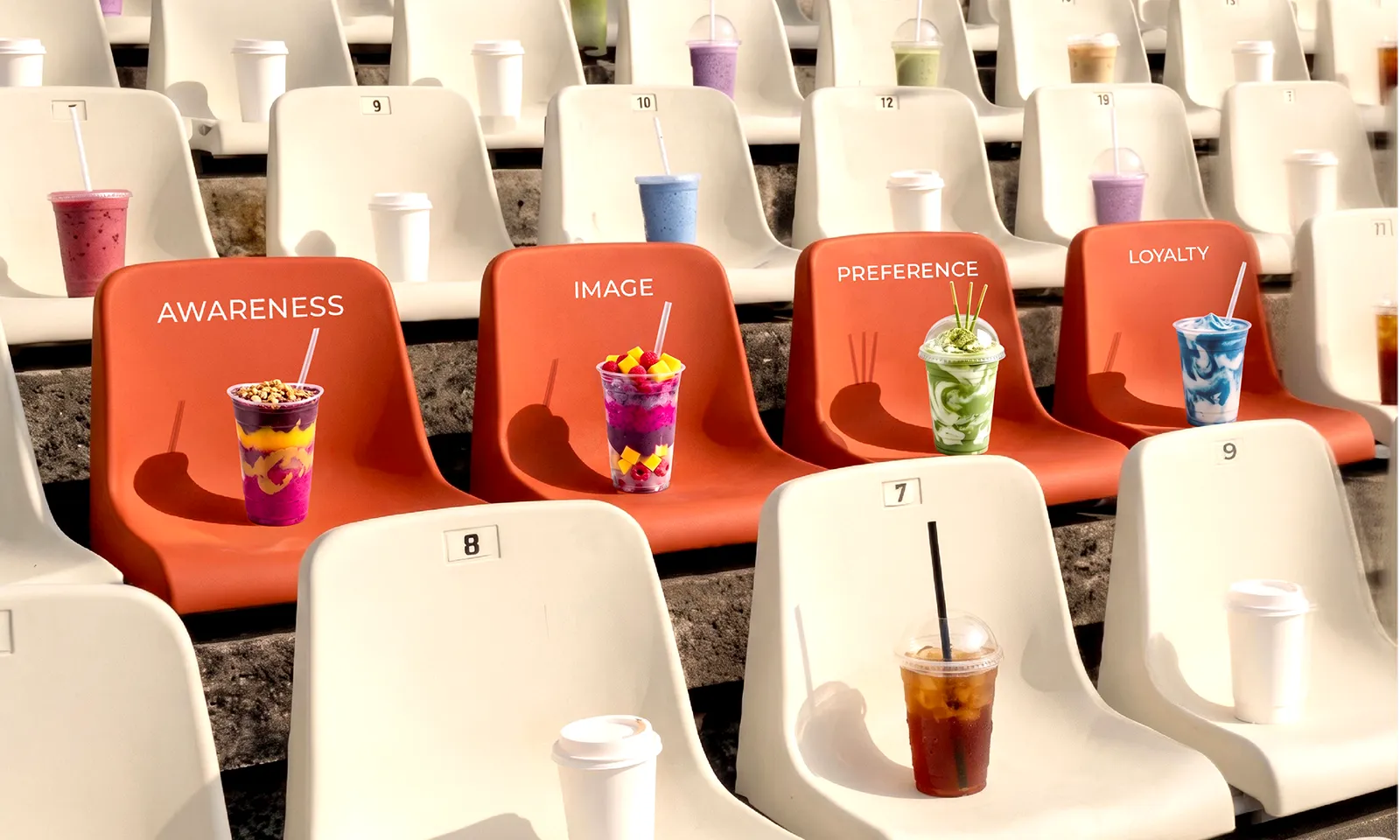
We look at brand success through four interconnected pillars: Awareness, Image, Preference and Loyalty.
Awareness: Are You First in Category?
Awareness is the strength and breadth of the user's memory structures that make a brand available when a category need arises. A brand needs to be easily recalled by the user across different environments, situations and memory cues where they may encounter a category need. Top-of-mind recall, recognition and recall value indicate whether a brand has established a mental presence within its category. Contemporary research on mental availability suggests that brands become stronger when they are linked to a broader network of memory cues and buying situations, rather than relying on a single top-of-mind measure.
Image: What Does the Brand Mean?
A brand’s image is shaped by the associations users hold around it. Socio-cultural positioning, collaborations and associations contribute to this meaning, influencing how your brand is understood within the wider cultural landscape. The communities it participates in, the people it partners with and the cultural spaces it occupies all contribute to its perceived relevance and social acceptability. Social signalling further strengthens brand image by shaping what choosing a brand communicates about the user such as their identity, aspirations and the communities they belong to. Understanding the kind of users your brand wants to attract and creating the right cultural and social associations can make the brand more relevant and desirable to them.
Preference: Why Should the User Choose This Brand?
Preference is where meaning begins to influence the user’s choice. Relevance and value indicate whether a brand has earned a meaningful role in people's lives, whether the product has become a habit, part of a routine, or something deeply relevant to everyday needs. When your brand becomes embedded in how users live, it moves beyond awareness into preference.
Loyalty: What Has the Brand Earned?
Loyalty is built through trust and advocacy. Trust gives users the confidence to choose a brand again, while advocacy takes that relationship further, with users willingly recommending the brand to others. This is where brand value begins to compound through people.
Awareness creates memory. Image creates meaning. Preference creates relevance. Loyalty creates advocacy. (as an image or diagram-notes)
Together, these four pillars provide a way to understand whether your brand is building lasting strength and creating the conditions for sustained demand.

.svg)
.svg)
.svg)

