


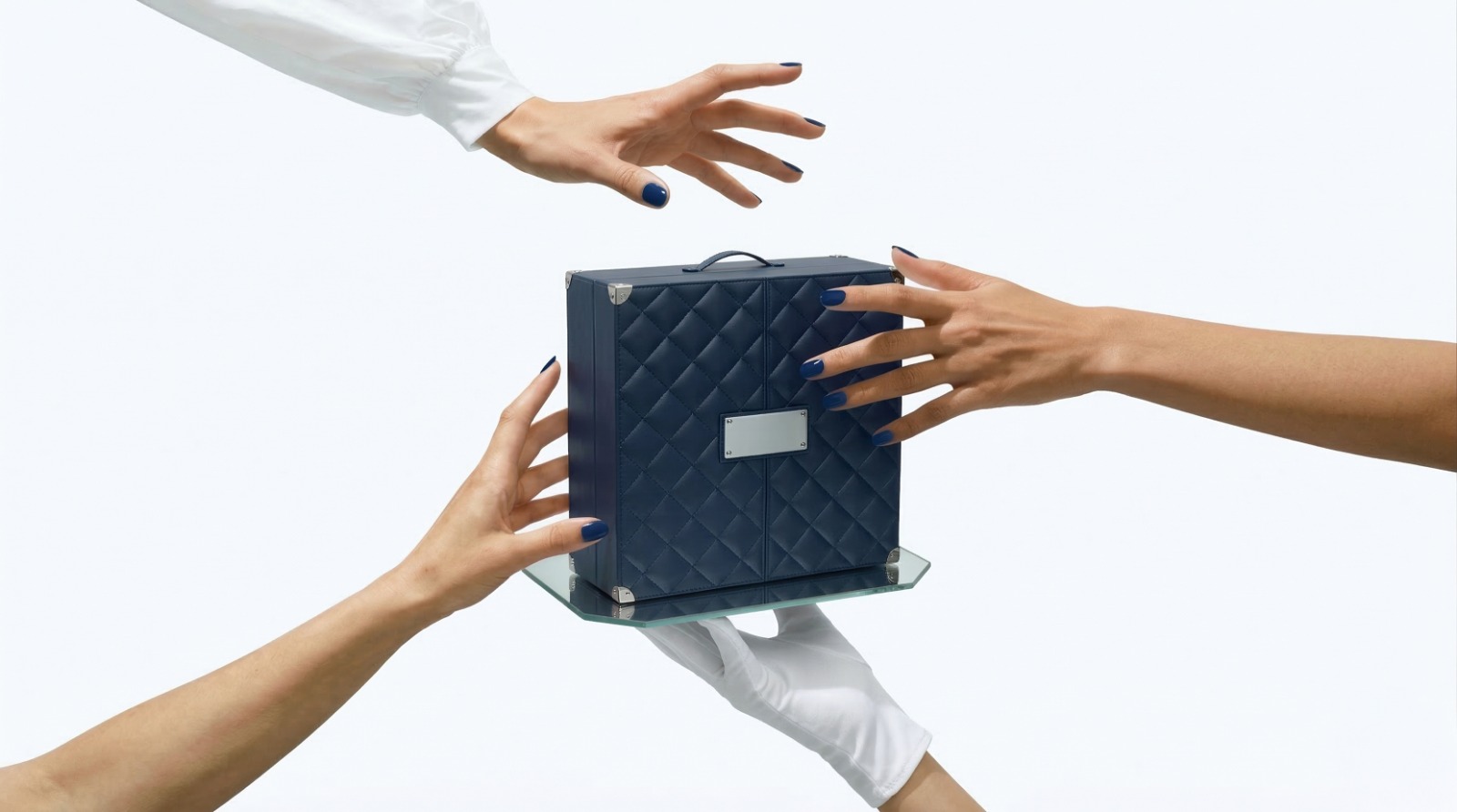
The structure of luxury is undergoing a quiet but significant recalibration.
For decades, luxury operated through exclusivity. Distinct products, recognisable design codes and gatekept ownership allowed brands to signal status within a clearly defined hierarchy.
That structure has not disappeared, but it has evolved.
Today, the pathway into a luxury brand is more distributed. Entry points increasingly emerge through categories such as fragrance, accessories and small objects. These products allow new consumers to engage with a house while preserving the prestige of its flagship creations.
Luxury therefore remains anchored in possession. However, the point of entry has diversified. A relationship with a brand may begin not with a handbag or couture garment, but with a scarf, a fragrance or a finely crafted accessory.
The object may differ in scale. The expectation does not.
Craft, heritage and legitimacy continue to define the value of luxury.
In an economy defined by visibility and comparison, luxury brands cannot rely on visibility alone. Attention has become the rarest resource. Brands that attempt to maximise exposure risk diluting their meaning. Those that maintain value communicate with discipline, presenting fewer signals but signals of greater clarity and credibility.
As luxury becomes more accessible and the market increasingly fragmented, ownership no longer functions as a clear signal of status. Instead, value is assessed through coherence: whether a product reflects an individual’s standards, aesthetic sensibility and way of living. A luxury object must now justify its place within the broader architecture of a person’s life. The purchase therefore becomes more an expression of personal intent and judgement.
That shift is visible in three areas.
1. Entry points are diversifying
Categories such as fragrance, accessories and small leather goods increasingly serve as gateways into luxury houses. For emerging brands, the challenge is to structure these entry points so they expand access while preserving the authority of the core product.
2. Client relationships are becoming the central brand asset
Luxury houses are investing heavily in clienteling, loyalty ecosystems and personalised engagement. For founders, this means building direct, enduring relationships with clients rather than relying solely on retail visibility.
3• Longevity is becoming integral to brand value
Repair, refurbishment and certified pre-owned programmes are expanding across the sector. New brands must therefore design products and narratives around durability, stewardship and long-term ownership.
Cultural legitimacy is becoming a competitive advantage
Luxury consumers increasingly look for brands with a clear point of view and cultural grounding. For founders, this means building a brand narrative rooted in craft, place or creative philosophy rather than relying solely on marketing visibility.
At Bblewrap, we approach luxury at this structural level of definition by aligning brand codes with business architecture so product, narrative and market presence move in unison.
Because in 2026, luxury is not preserved through visibility.
It is preserved through precision.
.svg)
.svg)
.svg)

